Monday, September 28, 2015

Module 4 Julie of the Wolves


Julie of the Wolves (Julie of the Wolves, #1)Module  4- Julie of the Wolves


Summary
The story is of a girl growing up in Arctic Alaska. The young girl of 13 ran away from an arranged marriage. The girl becomes lost in the tundra. The girl makes friends with a pack of wolves. The wolves take her in and help her to survive.  The second part of the book was a flashback to how she became married and what lead up to her running away.  The third part of the book the girl finds her way out of the tundra and finds her father. Will she stay with her father in his new live or will she return to the old Eskimo ways?

Reference of Book
George, J. (1972). Julie of the wolves. New York, NY: Harper & Row.

Impression
The book is a good read. The book talk about the behavior of the wolves and the structure of the pack which both girls and boys would find interesting. The book was an adventurer into the Arctic. The girl’s life as an Eskimo at a time when arranged marriages were common and the struggles that came with the experience.

Professional Reviews-
Summary and Critique
This Newberry Award winning novel, set in Arctic Alaska, features wolves as main characters. The story is divided into three parts instead of the traditional chapters. In Part I, a 13 year old Eskimo girl, Miyax, runs away from an arranged marriage and gets lost on the tundra. Using what she has learned from her father, she befriends a pack of wolves and gets them to accept her almost as a member of the pack in order to survive in this harsh and unforgiving terrain. Part II is a flashback telling about young Miyax's life before getting lost and how she got her "Gussack" (i.e. white) name, Julie. Finally, in Part III, the story returns to Miyax/Julie back on the tundra where the wolves have left for their winter grounds. She must now struggle alone, but eventually finds her way to the village where her long-lost father is living, having adopted the ways of white society. She then must decide if she wants her future to be a connection with her Eskimo past or if she wants to change with the times like her father has.
Besides being a compelling adventure story, the book also teaches about wolf behavior and social structure. Most appropriate for upper elementary and middle school, it could also be used as a read aloud for younger children. The wealth of tundra and Eskimo vocabulary is valuable for a science unit on the tundra or wolves or a social studies unit on Native Americans.
Swiderski, S., (2005) The College of Education, The University of Texas at Austin. Retrieved from http://www.edb.utexas.edu

George, Jean Chaighead. Julie of the Wolves. HarperCollins 1972. when an Eskimo girl runs away from an arranged marriage, she becomes lost on the tundra. Nurtured by wolves, she reexamines her cultural tradition. Childhood marriage and the subtle mention of attempted rape occur in this epic adventure, but readers will focus on Julie's relationship with her wolves, her will to survive, and the wealth of detail provided about tundra mammals and Inuit life.

Reutter, V. (2004) Julie of the Wolves (Book). School Library Journal, 50(5), 64.

Awards-Book Received
American Library Association Newbery Medal
National Book Award for Young People's Literature (Nominee)
Scholastic 200 for 2000
School Library Journal: 100 Books That Shaped the Century

Librarian Use
Book club could read and discuss. After students read book they could make a book trailer, write a review or other project to encourage others to read the book. 

Sunday, September 20, 2015

Module 3- The Girl Who Loved Wild Horses


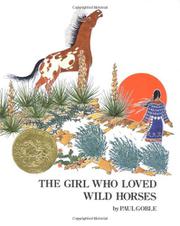
THE GIRL WHO LOVED WILD HORSES by Paul Goble Summary

A girl loved to be with the horse that belonged to her Indian tribe. One day a big storm came up and scared the horse and her. The horse ran with her on their back until they were lost. A beautiful stallion found the horse and the girl. The girl stayed with the stallion for a long time. When she went back to her parents she became very sick because she missed the stallion. Her parents’ final let her go live with the stallion. Every year she came back to see her parents. One year she did not come to see her parents, but the stallion had a beautiful mare with him. The legend says that the girl became the beautiful mare.

Reference of Book

Goble, P. (1978). The girl who loved wild horses. Scarsdale, NY: Bradbury Press.

Impression

This book was the Caldecott Medal winner in 1979. The illustrations help tell the story. The book has simple text and easy read for young readers. It is sad when the girl does not come back but it make the reader happy that she is doing what she loves and with the ones she loves most.

Professional Reviews

Paul Goble - The Girl Who Loved Wild Horses
The Girl Who Loved Wild Horses A Plains Indian girl is lost in the mountains during a storm. A wild stallion becomes her friend and she decides to ride free with the herd even after she is found. ". . . Storytelling and art express the harmony with and the love of nature which characterize Native American culture".--The Horn Book. Caldecott Medal; ALA Notable Children's Book. Full-color illustrations.

Paul Goble - The Girl Who Loved Wild Horses - Read expert reviews at epinions.com. (n.d.). Retrieved
          September 21, 2015, from
          http://www.epinions.com/reviews/The_Girl_Who_Loved_Wild_Horses_by_Paul_Goble/2004292333
      
        There are many parallel legends – the seal women, for example, with their strange sad longings – but none is more direct than this American Indian story of a girl who is carried away in a horses’ stampede…to ride thenceforth by the side of a beautiful stallion who leads the wild horses.  The girl had always loved horses, and seemed to understand them “in a special way”; a year after her disappearance her people find her riding beside the stallion, calf in tow, and take her home despite his strong resistance.  But she is unhappy and returns to the stallion; after that, a beautiful mare is seen riding always beside him.  Goble tells the story soberly, allowing it to settle, to find its own level.  The illustrations are in the familiar striking Goble style, but softened out here and there with masses of flowers and foliage – suitable perhaps for the switch in subject matter from war to love, but we miss the spanking clean design of Custer’s Last Battle and The Fetterman Fight.         

          THE GIRL WHO LOVED WILD HORSES by Paul Goble. (2012) Retrieved from https://www.kirkusreviews.com/book-reviews/paul-goble/the-girl-who-loved-wild-horses/

Librarian Use

This book would be good for celebrating Native American Culture during story time. Young children could pretend to be horse and act out the book. 

Monday, September 7, 2015

Module 2- Nana Upstairs and Nana Downstairs


Module 2- Nana Upstairs and Nana Downstairs


Nana Upstairs and Nana DownstairsSummary
The story is about a little boy going to visit his grandmother. His grandmother was taking care of her mother, the boy’s great grandmother. The grandmother was Nana downstairs because she worked mostly downstairs. The great grandmother was Nana upstairs because she stayed upstairs and didn't come downstairs. The story tells what the boy does with his great grandmother. Then Nana upstairs died and the little boy was very sad.

Reference of Book
dePaola, T. (1973) Nana upstairs & Nana downstairs. New York, NY: G.P. Putnam's Sons.

Impressions
This is a fantastic generational story. This book introduces children to losing a loved one. It is done in a way that is very easy for children to understand. It is fine to be sad and memories are important. It made me think about my own grandparents and the thing we did every time we saw them. I think other children will make the same connection. This book was sad and happy when the boy lost both of his Nana's. The falling stars were kisses from Nana and reminded him of his Nana's. Even when the boy was an adult he remembered his Nana's.

Professional Reviews
This [Nana Upstairs and Nana Downstairs] is one of the best of the several stories for very young children that shows the love between a child and a grandparent, and pictures the child's adjustment to death. Like Lundgren's Matt's Grandfather, this stresses the affinity between the very young and the very old; unlike any of the other stories, it includes a great-grandmother as well as a grandmother. Small Tommy calls his ninety-four-year-old grandmother "Nana Upstairs" because she is bedridden; downstairs her daughter is busily keeping house, she's "Nana Downstairs." When great-grandmother dies, Tommy learns about death and, years later, he is better prepared when Nana Downstairs dies in her old age. The book gives a tender--but not overly sentimental--picture of the child's relationships with his grandmothers, the quiet tone given relief by touches of humor--as when Tommy sees his older grandmother tied into a chair to enjoy a rare time of being out of bed, and he wants to be tied in, too. "So every Sunday ... Nana Downstairs would come up the back stairway and tie Nana Upstairs and Tommy in their chairs, and then they would eat their candy and talk."

Review of Nana Upstairs and Nana Downstairs. (2003). In S. Peacock (Ed.), Children's Literature Review (Vol. 81). Detroit: Gale. (Reprinted from Bulletin of the Center for Children's Books, 1973, October, 27[2], 24-25) Retrieved from http://go.galegroup.com

PreS-Gr 2--Four-year-old Tommy calls his 94-year-old great-grandmother Nana Upstairs (because she's always upstairs in bed) and his grandmother, Nana Downstairs. On Sunday visits he especially likes having Nana Downstairs tie him and Nana Upstairs in their chairs so they won't fall out, listening to Nana Upstairs' tales about the "Little People," and watching Nana Downstairs comb out her own and Nana Upstairs' beautiful silver-white hair when they all got up from their naps. Then Nana Upstairs dies, and Tommy learns that she will never come back, except in his memory. Unfortunately, the rest of the book gets a little soupy, with falling stars representing kisses from heaven and both Nanas eventually becoming "Nana Upstairs," but none of this will offend. The charcoal drawings, filled with pink, rose and tan tints, depict a 1940-ish grandmotherly house and people; the print is large and clear on light beige paper; and each page in this easy-to-handle lap-book  is appealingly framed. Children will want to hear [Nana Upstairs and Nana Downstairs] again and again, as they puzzle over what it means to be young and old and very old and, finally, to die.

Melina, S. (2003). Review of Nana Upstairs and Nana Downstairs. In S. Peacock (Ed.), Children's 
Literature Review (Vol. 81). Detroit: Gale. (Reprinted from School Library Journal, 1973, September, 20[1], 56) Retrieved from http://go.galegroup.com
Library Uses
This book would be good to share with children that just lost a grandparent. Nana Upstairs and Nana Downstairs would be good for celebrating grand parents day. This book would be good to recommend to a child that has lost a grandparent.


Review by Booklist Review
Ages 3^-7. Originally published in 1973, this autobiographical picture book was one of the first to introduce very young children to the concept of death. Given its graceful treatment of a difficult subject, it has been a parental staple ever since, and a new generations of readers will be glad to discover this timeless tale in a lovely new edition. In an appended note, dePaola says he approached this project "as a completely new book." Thus, the format is larger than formerly, the pictures have been re-done in full color, and even the text has been slightly modified, though the story remains the same: every Sunday four-year-old Tommy's family goes to visit his grandparents. His grandmother is always busy downstairs, but his great-grandmother is always to be found in bed upstairs, because she is 94 years old. Tommy loves both of his nanas and the time he spends with them. He is desolate when his upstairs nana dies, but his mother comforts him by explaining that "she will come back in your memory whenever you think about her." Although dePaola's book is a nostalgic tribute to his own family, its theme--that not only people but our love for them survives in our memories--is universally true and important. --Michael Cart
From Booklist, Copyright (c) American Library Association. Used with permission. - See more at: http://www.buffalolib.org/vufind/Record/952555/Reviews#sthash.VQJaYN3x.dpuf

Review by Booklist Review
Ages 3^-7. Originally published in 1973, this autobiographical picture book was one of the first to introduce very young children to the concept of death. Given its graceful treatment of a difficult subject, it has been a parental staple ever since, and a new generations of readers will be glad to discover this timeless tale in a lovely new edition. In an appended note, dePaola says he approached this project "as a completely new book." Thus, the format is larger than formerly, the pictures have been re-done in full color, and even the text has been slightly modified, though the story remains the same: every Sunday four-year-old Tommy's family goes to visit his grandparents. His grandmother is always busy downstairs, but his great-grandmother is always to be found in bed upstairs, because she is 94 years old. Tommy loves both of his nanas and the time he spends with them. He is desolate when his upstairs nana dies, but his mother comforts him by explaining that "she will come back in your memory whenever you think about her." Although dePaola's book is a nostalgic tribute to his own family, its theme--that not only people but our love for them survives in our memories--is universally true and important. --Michael Cart
From Booklist, Copyright (c) American Library Association. Used with permission. - See more at: http://www.buffalolib.org/vufind/Record/952555/Reviews#sthash.VQJaYN3x.dpuf