Sunday, November 22, 2015
Book Trailer for Ender's Game By Orson Scott Card
Card, O., (1991). Ender's game. New York, NY: Tor.
Images from Public Domain.

Saturday, November 21, 2015
Looking for Alaska
Green, J. (2005). Looking for Alaska: A novel. New York, NY: Dutton Children's Books.
Images from Animoto and Susan Kohler Ray.
Module 15 – Looking for Alaska

Summary
Miles goes to a boarding school where he finds the Colonel
and Alaska. The three become great friends.
The friends play pranks and fall in love. The three smoke and drink to
deal with their problems. Then tragedy happens and the friends’ lives will
never be the same.
Reference of Book
Green, J. (2005). Looking for
Alaska: A novel. New York, NY: Dutton Children's Books.
Impression
The characters dealt with adult issues. I wish books for
high school students didn’t deal with sex, smoking and drinking. The story
started out as count down to a date, the reader has no idea what the day is.
Then tragedy happens and the author starts counting days since the event. Story
was a good read. I look forward to seeing the movie.
Professional Reviews
I recently reviewed Green’s latest book, and
loved it, so when I saw this one at the library, I immediately snatched it up.Miles moves from Florida to Alabama to attend Culver Creek Preparatory School. There, he meets his roommate “The Colonel” also known as Chip Martin. Miles wasn’t all that popular at his previous school, in fact…no one really knew he existed so when Chip shows an interest in him, he eases into the friendship knowing that it could disintegrate at any moment. After their brief introduction and receiving the nickname of Pudge (even though Miles is skinny as a rail), Miles is introduced to Alaska Young.
Alaska is witty and beautiful and different from the girls back home but she is also taken. Her college boyfriend is mentioned numerous times but is never seen. This mysterious air is what attracts Miles to her, but it’s also what frustrates him most. Especially when she goes missing and he and Chip are left to figure out what happened.
The story is broken up into two parts, before and after with before being the events leading up to her disappearance, and after, the events that followed it. As a reader, I knew right away that something was going to happen, but I had no idea what. With each chapter breaking it down even further (2 months before, 28 days after, etc), which worked to a degree as I certainly felt the tension build, the end result was not what I had hoped for. The ending left a lot of questions unanswered and to be honest with you, this pissed me off. The structure begs for resolution. You cannot lead a reader down the before/after path and not give them something in return!
My reaction to the ending, affected my overall enjoyment of the book itself. Putting the ending aside, I will say that I enjoyed the dialogue between the characters and the development of Miles over time. He is a likable character and his interactions with the other characters were often entertaining if not, enjoyable. Scores of readers have praised the book for its emotional punch so perhaps its magic was lost on me. After all, I am not a young teen by any stretch of the imagination and that is what this book is geared towards even with its numerous mentions of alcohol and sex.
Tina
(date). Review: Looking for Alaska [Review of the book Looking for Alaska,
by J. Green]. Book Chatter. Retrieve from
http://bookchatter.net/2012/06/26/review-looking-for-alaska/
Librarian Use
Display book with other books that are being made into movies. Encourage patrons to read before movie comes
out. Start a lunchtime book club. Read book and discuss.
Something Big Has Been Here by Jack Prelutsky
Something BIG Has Been Here

Summary
This book is a collection of poems written by Jack
Prelutsky. The poems are funny and silly. There are tigers, Addle-pated
Paddlepuss and many other characters that are part of the hilarious poems.
Reference of Book
Prelutsky, J. (1990). Something big
has been here. New York, N.Y: Greenwillow Books.
Impression
The poems are very funny. Some of the words are made up and
others would be useful to teach vocabulary. I am not a fan of poetry but the
poems were fun to read and could be used to each different reading skills. I
like the title index and first line index at the end to help find just the
right poem.
Professional Reviews
A wealth of funny new verse from a
favorite poet. Prelutsky’s comic muse is at its best here – whether
describing a homemade robot gone berserk (“…it ate the dust pan/and attacked us
with the broom, /it pulled apart our pillows, /it disheveled both our beds…”)
or a whimsical trip to yesterday (“I’m moving very fast/as I’m putting off the
future/for the rather recent past…”), he uses unexpected, vivid words in
infectiously rhythmic cadences. Amusing details abound – in a long list
of the many fish a boy is not catching, or in a
tall-tale adventure “that’s the reason why my homework/isn’t here with me
today.” Many of the entries end with a nifty surprise or a deft comical
twist. Stevenson, who also illustrated Prelutsky’s The New Kid on the Block (1984), contributes quietly
hilarious b&w art. Another winner from this talented pair.
Kirkus
Reviews (2010). Something Big Has Been Here [Review of the book Something Big has been here,
by J. Prelutsky]. Kirkus Reviews. Retrieved from https://www.kirkusreviews.com
Librarian Use
Use to introduce poetry.
Have the students learn a poem to share during Poetry Month (April). Use to
teach imager to children.
Module 13- Giants Beware
Module 13- Giants Beware

Summary
Claudette is a giant slayer. Claudette and friends set off
on an adventure to find a giant and slay before their parents stop them.
Reference of Book
Aguirre, J., & Rosado, R. (2012). Giants
beware! New York: First Second.
Impression
Great story! It has bullies and heroes. The characters grew
and changed in the story. Claudette did
not let the bullies bother her or her friends. She kept her focus and knew what
she wanted to do. Once she got found the giant, he was not what was said about
him. I did not like reading the graphic novel format.
Professional Reviews
Between “The Hunger Games” and Pixar’s forthcoming “Brave,”
which will feature the animation studio’s first female protagonist, fierce and
feisty heroines are all the rage.
In “Giants Beware!,” written by Jorge Aguirre and
illustrated by Rafael Rosado, the heroine in question is Claudette, a
khaki-robed, redheaded, self-proclaimed “giant slayer.” Claudette may be
undersize, hotheaded and prone to violence and lock-picking, but she’s also
loyal, brave and ambitious.
Claudette has two sidekicks: Marie, an aspiring princess,
and Gaston, Claudette’s fearful little brother, whom she lightly cons (her
fingers are crossed) into joining her on a mission to kill the local
baby-feet-eating giant by promising princesshood to one and sword-making
lessons to the other.
The story, with its riffs on fairy tales and quest
narratives, offers just the right balance of familiarity and originality, with
plenty of humorous asides. Valiant, a terrorizing pug, treats the marquis’s
castle like a toilet. Claudette suspends a town bully by his underwear, and
there is an abundance of slapstick. Stinky feet figure in the story too.
But this is also the kind of story in which even aspiring princesses who obsess
over hem length are outraged by the improper use of prepositions.
Paul,
P. (2012). Girl Gets the Giant [Review of the book Giants Beware!, by
J. Aguirre]. The New York Times. Retrieved from http://www.nytimes.com
Librarian Use
This book could be used
to introduce children to graphic novels. Use in a display of books that show girls as brave and heroic.
Module 12- Martin's Big Words
Module 12 – Martin’s Big Words

Summary
A picture book biography of Martin Luther King Jr. that introduce
children to King’s legacy of the changes that he help make to America. Martin’s
Big Words tells the story about his dream to change the world forever.
Reference of Book
Rappaport, D., & Collier, B.
(2001). Martin's big words: The life of Dr. Martin Luther King, Jr. New
York, NY: Hyperion Books for Children.
Impression
The picture book was very well illustrated. It is a good
book to talk about segregation and what his words can do. I liked how it was
his words change the country and he did not use violent. Martin fought for all
people and showed a country how to use words.
Professional Reviews
The Barnes & Noble Review
Acclaimed author Doreen Rappaport and Coretta Scott King Award winner Bryan Collier, who previously collaborated on Freedom River, have pooled their talents yet again in a stunning tribute to civil rights activist Dr. Martin Luther King Jr. An extraordinary picture-book biography, Martin's Big Words consists of Rappaport's own words interwoven with quotes from Dr. King...all powerfully brought to life by Collier's striking, glorious art.
Acclaimed author Doreen Rappaport and Coretta Scott King Award winner Bryan Collier, who previously collaborated on Freedom River, have pooled their talents yet again in a stunning tribute to civil rights activist Dr. Martin Luther King Jr. An extraordinary picture-book biography, Martin's Big Words consists of Rappaport's own words interwoven with quotes from Dr. King...all powerfully brought to life by Collier's striking, glorious art.
Rappaport's spare, gripping text and Collier's distinctive collage-and-watercolor illustrations depict King's life journey with reverence and dignity -- beginning with his childhood experience of seeing "White Only" signs throughout his hometown, presenting his efforts as a civil rights crusader, and ending abruptly with his assassination. The front cover of the book immediately conveys King's power and spiritual strength, consisting entirely of a lifelike portrait of him -- the title and the author's and illustrator's names are relegated to the back cover. As Collier says in his illustrator's note, he "tried to push [the imagery] to an emotional level that allows the reader to bring his or her own experience to it, without actually losing the intensity or the intention of the story." His technique is utterly effective.
By using simple, direct language -- much of it King's -- the text offers young readers an accessible yet profound introduction to King's legacy. It explains that as a child, he listened to his minister father's "big words" and vowed to inspire others with such words when he grew up. The book's final sentence: "His big words are alive for us today," testifies to King's success -- and to the timeless importance of this great leader's ideals. As further inspiration for interested readers, Martin's Big Words includes a list of significant dates as well as a bibliography of resources for them to explore.
Levine, J., (2002). Martin’s Big Words: The Life of Dr. Martin
Luther King Jr. [Review of the book Martin’s Big Words: The Life of Dr. Martin
Luther King Jr., by D. Rappaport]. Goodreads, Retrieved from
http://www.goodreads.com/book/show/160943.Martin_s_Big_Words
Librarian Use
Story time in January to introduce Black History month and
why we celebrate Martin Luther King Jr.'s birthday day.
Saturday, November 7, 2015
Module 11 - George Washington Teeth
Module 11- George Washington’s Teeth

Summary
The story George
Washington’s Teeth tells about George Washington’s struggle with his teeth.
George lost teeth at during the American Revolution and crossing the icy
Delaware.
Reference of Book
Chandra, D., & Comora, M. (2003). George
Washington's teeth. New York, NY: Farrar Straus Giroux.
Impression
Fun and clever book that showed George Washington’s struggle
with his teeth. Children can identify with losing teeth and the pain. The story has a nice time line at the end of
the book. The book talked about the American Revolution and crossing the Delaware,
which could get children interested in history.
Professional Reviews
George Washington’s Teeth
In a clever approach to history,
Chandra and Comora string together spry stanzas describing the dental difficulties
that plagued George Washington. Rhyming verse explains how the general's rotten
teeth gradually fall out during the Revolutionary War: "George crossed the
icy Delaware/ With nine teeth in his mouth./ In that cold and pitchy dark,/ Two
more teeth came out!" Cole complements this verse by rendering a sly
watercolor twist on Emanuel Leutze's famous painting George Washington Crossing the Delaware, in a
full-spread treatment: Washington still stands in quiet dignity, but the
boatmen are grinning. By the time Washington is elected president, just two
teeth remain in his mouth. Kids will love the details, such as the way
Washington uses a pair of his molars to fashion a mold from which the dentist
makes a set of dentures (these are carved from hippopotamus ivory, and even
shown, in a photograph in the afterword). Infusing his bustling watercolor
vignettes with comic hyperbole, Cole easily keeps pace with the lighthearted
narrative. One especially funny image shows the president sprawled on the
floor, legs in the air, after viewing a newly painted portrait ("George
stood up to have a look—/ He fell back on his fanny./ 'It doesn't look like
me!' he roared./ 'It looks like Martha's granny!' "). An annotated
timeline at the end includes quotes from the leader's letters and diaries
chronicling his relentless efforts to hide his dental problems and the extent
to which they caused him chronic pain and embarrassment. A highly palatable
historical morsel. All ages.
Georg Washington’s Teeth (2003). Review
of George Washington’s Teeth by Deborah Chandra and Madeleine Comora. Publishers
Weekly. Retrieved from http://www.publishersweekly.com/978-0-374-32534-3
Librarian Use
This book would be good
to share Presidents Day or the month of February. It shows the First Presidents
character and the struggles that he had. It could also be tied to dental
health.

Module 10 - Shoeless Joe and Black Betsy

Module 10- Shoeless Joe and Black Betsy
Summary
Shoeless Joe Jackson wanted to be a famous baseball player.
He knew he had to have a great bat that would help him hit the ball like know
one else. Joe had the great bat maker Ol’ Charlie Ferguson make him a bat.
After several tries will Joe get the right bat?
Reference of Book
Bildner, P., (2002). Shoeless Joe
& Black Betsy. New York, NY: Simon & Schuster Books for Young
Readers.
Impression
Great book! I did not know much about Shoeless Joe before
reading this book. The book was about his determination to get the best bat to
play baseball. Even though he gave a lot of credit to the bat, you see his
determination. In the Afterword was an informational section about even how he
got his name as Shoeless Joe and was kicked out of baseball.
Professional Reviews
One of baseball's greats receives star
treatment in this compelling book. Shortly before "Shoeless Joe"
Jackson (so named for having played a game in his stocking feet) joins the
minors, he falls into a slump, and out of desperation ends up in the workshop
of "the finest bat smith in all of South Carolina." Joe names the bat
Ol' Charlie Ferguson makes for him Betsy ("Pitchers are going to honor and
respect this bat the way they respect the flag Betsy Ross created," the
hero states), but the slump continues. So does the partnership between the two
men as Ol' Charlie refines the bat's design—it's remade from the "north
side of a hickory tree" and rubbed down with tobacco juice so it will be "dark
and scary-looking"—and Joe learns how to massage it with sweet oil and
keep it wrapped in cotton ("Cotton will make Black Betsy feel right at
home in Cleveland," Ol' Charlie tells him). Finally Betsy takes him to the
major leagues and his finest season ever. Rookie Bildner hits a home run here,
zeroing in on the bat as just the right lens through which to view his picture
book biography. He strews the conversational prose with appealing
colloquialisms in a catchy refrain ("sure as the sky is blue and the grass
is green"). Payne's (The Remarkable Farkle McBride)
portraits take on a tall-tale quality suffused with nostalgia; his
strong-featured characters offer a riveting blend of humor and gravity. An
afterword fills in the details of Jackson's life and career, including the 1919
Black Sox scandal. Ages 5-8. (Mar.)
Publishers Weekly (2003). Shoeless Joe & Black Betsy [Review of
the book Shoeless Joe and Black Betsy, by Phil Bildner]. Publishers Weekly. Retrieved from http://www.publishersweekly.com/978-0-689-82913-0
Librarian Use
This book would be good to kick off baseball
season and baseball history and information on bats and making bats. Children could measure and weigh bats.
Module 9- Cam Jamsen

Module 9- Cam Jansen and Secret Service Mystery
Summary
The governor comes to dedicate the school new library. The
governor is accompanied by the secret service since he is running for
president. While at he school there is a loud bang. Everyone thought it was a gunshot
but Cam found out it was a cover for something much bigger.
Reference of Book
Adler, D. (2008). Cam Jansen and the
secret service mystery. New York, NY: Peguin Young Readers Group.
Impression
The book was an easy read. The story is an easy mystery for
children to follow with the villain caught and not revealed until the end. I
was disappointed that the mystery was a little simple. The characters did not
change or grow from their adventure. The villain was reveal was not very
interesting. All of the action took place from Cam’s perspective. The story
line was very simple.
Professional Reviews
Children's Literature - Norah Piehl
Cam (short for "The Camera")
Jansen has a photographic memory, a talent that serves her particularly well
for solving the many mysteries that have come her way. In this, her
twenty-sixth adventure, Cam goes to a school assembly and winds up
investigating a jewelry theft. The governor (who is running for President)
comes to Cam's school to dedicate a new library donated by a wealthy couple,
the Pearls. During a frightening incident that distracts the secret service
agents, Mrs. Pearl's valuable necklace disappears. Can Cam "click"
her way to solving the mystery before the thief can make his getaway? The enduring
appeal of this series owes much to Cam's winning personality and to the
non-threatening, involving mystery plots, which make Adler's series a perfect
introduction to the mystery genre. Susanna Natti's expressively comic
illustrations further contribute to the story's gentle nature—the book even
includes a memory game that allows budding sleuths to match wits with Cam
herself.
Piehl,
N. (2008). Children’s Literature [Review of Cam
Jansen secret service mystrey, by D Adler]. Children’s Literature.
Retrieved from http://www.barnesandnoble.com
Librarian Use
Include book in a display about mysteries. Use this book to create a skit
to get children interested in reading mystery.
Module 8- Lightning Thief
Riordan, R. (2005). The lightning
thief. New York, NY: Miramax Books.

Summary –
Percy Jackson is a half blood, half human and half god. He
tells the story of when he was twelve and had to get Zeus’ lighting bolt back. Percy’s
adventure takes him across the country from New York to Los Angeles. Percy
traveled with Grover, half goat half boy, and Annabeth a half blood. They
traveled by bus, train and a taxicab. The meet Medusa and almost became
statues. He helps zebra’s escape in from smugglers. He almost loses his
memories in an enchanted Vegas casino. Once in Los Angeles, Percy finds the
gates to the Underworld where they meet Hades. Hades does not have the lighting
bolt and is missing his own symbol of power: the Helm of darkness. Percy is
accused to the crime. Percy must figure out where and who stole the bolt and
helm and return to their owners before the Greek gods and goddesses become
angry.
Reference of Book
Riordan, R. (2005). The lightning
thief. New York, NY: Miramax Books.
Impression
The lightning thief
was amazing. The story started off with Percy finding out that he was a
half blood and the adventure starts right away. The book is interesting because
it has gods, humans, mystery and suspense. Greek mythology was introduced on a
young adult level. This could cause readers to research to learn more about
mythology. The characters were real to a young audience. Percy is just like any
other twelve year old, who has trouble in school. Percy has ADHD and dyslexia
making school hard.
Professional Reviews
Percy Jackson is a good kid, but he
can't seem to focus on his schoolwork or control his temper. And lately, being
away at boarding school is only getting worse—Percy could have sworn his
pre-algebra teacher turned into a monster and tried to kill him. When Percy's
mom finds out, she knows it's time that he knew the truth about where he came
from, and that he go to the one place he'll be safe. She sends Percy to Camp
Half Blood, a summer camp for demigods (on Long Island), where he learns that
the father he never knew is Poseidon, God of the Sea. Soon a mystery unfolds
and together with his friends—one a satyr and the other the demigod daughter of
Athena—Percy sets out on a quest across the United States to reach the gates of
the Underworld (located in a recording studio in Hollywood) and prevent a
catastrophic war between the gods.
Goodread (2011). Review of The Lightning Thief. Retrieved
from http://www.goodreads.com/book/show/28187.The_Lightning_Thief
Librarian Use
This book would be good
to have in a display showing books that have become movies. It would also be
good for a book club or an online discussing board.
Sunday, October 25, 2015
Module 7- Ivy + Bean Break the Fossil Record
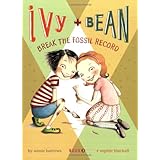 Module 7- Ivy + Bean Break the Fossil Record
(Book 3)
Module 7- Ivy + Bean Break the Fossil Record
(Book 3)
Summary
Ivy and Bean are two 2nd grade
girls that are come up with a plan to be the youngest paleontologist. The two girls come up with a plan to dig in
Bean’s own backyard. They found bones but they were bones that the dog had
buried.
Reference of Book
Barrows, A. (2007). 3 Ivy Bean:
Break the Fossil Record. San Francisco, CA: Chronicle Books.
Impression
This is a great book for young girls. This
book is a realistic friction that will encourage girls to try anything. It also
encourage the children to try something new and think out of the box.
Professional Reviews
KIRKUS REVIEW
A charismatic duo makes
their debut in this new chapter-book series. Barrows provides a fresh take on
the standard odd-couple tale of friendship, with a caveat to readers of not
judging a book by its cover—or the new girl by her seemingly goody image. Bean,
an energetic girl with an inclination for mischief, just doesn’t see the appeal
of her new neighbor Ivy, whom her mother extols as such a “nice girl,” which
Bean readily translates to mean dull. However, when she needs to escape the
wrath of her bossy sister Nancy, Bean discovers a whole new dimension to the
quiet girl next door. Together Ivy and Bean concoct a plan to cast Ivy’s
fledgling dancing spell on Nancy, with unexpected and hilarious results. With a
hearty helping of younger sibling angst, a sprinkling of spells and potions and
a dash of nosy neighbors, Barrows has the perfect recipe for solidifying a
newfound friendship. Blackall’s saucy illustrations detailing the girls’
hijinks and their calamitous outcomes are liberally featured throughout the
text. Readers are bound to embrace this spunky twosome and eagerly anticipate
their continuing tales of mischief and mayhem. (Fiction. 6-10)
Kirkus Reviews (2006).
Retrieved from https://www.kirkusreviews.com/book-reviews/annie-barrows/ivy-bean/
|
Rhiannon and I selected
our first Ivy and Bean book, Ivy + Bean Break the Fossil Record for
three reasons. First, the cover had two girls on it; second, the cover
illustration was very funny, and third, the book promised to be about fossils
and paleontology. Rhiannon at six years old (she will be seven by the time
this review is published) already styles herself a “junior paleontologist,”
and rightfully so I suppose. She identified her first fossils correctly,
molluscs from the Pliocene Pinecrest Formation of Florida, when she was only
three! And for the past two summers she has worked as a paid assistant in the
paleontology lab at the California Academy of Sciences (earning money for
rubber snakes and Barbie dolls). So, she was naturally intrigued by a book
that claimed to tell the story of the world's youngest paleontologists, and
also one that claimed to break the Fossil Record.
The book is the third in
the Ivy and Bean series by Annie Barrows, and features second grade best
friends Ivy and Bean. The pair are that often-used, but perhaps all too true
odd couple. Ivy is studious, well-mannered and a little shy, while Bean is
outspoken and a bit bored with her age. Any parent of a young girl reading
this might recognize both characters immediately! This installment of
the series opens with a classroom independent reading session, in which Bean
is absolutely bored until the teacher gives her a special book, a book of
world records. Meanwhile, Ivy is engrossed in a book about a character that
should be familiar to all paleontologists, Mary Anning. Mary Anning was a
young girl of the 19th century living in southern England. She is
most famous for her discovery of the first complete ichthyosaur fossil at the
age of 12, though she went on to have an illustrious career, also discovering
the first species of plesiosaur. Bean entertains the class with hilarious
stories of various record breakers (our favourite being the boy who stuck
fifteen spoons to his face), but Ivy is entranced by Anning's story. Bean
eventually decides to be a world record holder, and embarks on several
unsuccessful but hugely entertaining attempts at various records, including
Rhiannon's favourite, the stuffing of the most straws in one's mouth.
(Thankfully, my co-author decided that this was not a good idea, though the
straws had already been purchased). It is at this point that the story comes
together: Ivy and Bean decide to break Mary Anning's record as the world's
youngest paleontologist. What follows is a series of bone discoveries,
childrens' misadventures, and the opening of a new museum. All in a single
backyard!
This book could be
dismissed as just another copy of a Cleary story, or as a silly pun on
paleontological matters, but we think that it has more to offer. Ivy and Bean
are both portrayed as believable characters, exhibiting all the charm of
children at the brink of their ages of discovery. It is hardly ever obvious
what the spark will be for any particular child. For Bean it was the
discovery of world records, while for Ivy, it was that topic that many PE
readers will identify with, paleontology. Barrows is clearly a keen observer
of interactions among children, and that's what this book is all about. Never
mind the scientific inaccuracies which crop up here and there; you'll also
find those in every well respected popular news publication, and even, gasp,
scientific journals. For Rhiannon, the summary of the book is simple: It
features girls, the title is funny because “Record” means both world and
fossil record, Ivy and Bean remind her of her own friends, and they built a
museum with their own fossil discoveries. For me, the book was perfect
bedtime reading with the little one, and was a funny and precious thing to
share as a paleontological parent (I look forward to someday being a fossil
parent). That's a lot of positive gain from a small and simple book.
Epilogue: Mary Anning's
career as a paleontologist is noteworthy because of her discoveries, the
contribution of those discoveries to our understanding of extinction, and her
gender. She was able to support her family as necessary with fossil sales and
patronage. She was eventually granted an annuity by the British Association
for the Advancement of Science and was made an honorary member of the
Geological Society of London. She never, however, held a paid position, nor
was she elected to full membership in these associations, most likely because
of her gender. She died of breast cancer at the young age of 47.
|
|
|
|
Roopnarini, P., &
Roopnarine, S. (2008). Palaeontologia Electronica. Retrieved from http://palaeo-electronica.org/2008_3/books/ivy.htm
Librarian
Use
After students read the book they can make a book
trailer. Students could write a script about the book.
Module 6 - Creepy Carrots
Summary
Jasper the rabbit loves carrots. He likes to stop at Crackenhopper
field and snack on carrots. Then one day Jasper thought that creepy carrots
where following him. Jasper saw them in the bathroom, storage shed and on the way
home. Jasper came up with a plan to build a fence around the field with a moat.
Jasper no longer saw creepy carrots. The creepy carrots were behind the fence.
Reference of Book
Reynolds, A. (2013). Creepy
carrots! New York, NY: Weston Woods Studios.
Impression
This book was fun to share with children. Peter Brown, the
illustrator, made the pictures are creepy but with a twist. What Jasper really
saw was just a figment of his imagination.
Professional Reviews
Jasper loves carrots, especially those “free for the taking.” He pulls some in the morning, yanks out a few in the afternoon, and comes again at night to rip out more. Reynolds builds delicious suspense with succinct language that allows understatements to be fully exploited in Brown’s hilarious illustrations. The cartoon pictures, executed in pencil and then digitally colored, are in various shades of gray and serve as a perfectly gloomy backdrop for the vegetables’ eerie orange on each page. “Jasper couldn’t get enough carrots … / … until they started following him.” The plot intensifies as Jasper not only begins to hear the veggies nearby, but also begins to see them everywhere. Initially, young readers will wonder if this is all a product of Jasper’s imagination. Was it a few snarling carrots or just some bathing items peeking out from behind the shower curtain? The ending truly satisfies both readers and the book’s characters alike. And a lesson on greed goes down like honey instead of a forkful of spinach.
Smith, V. Kirkus Review (2012) Retrieved from https://www.kirkusreviews.com
Jasper Rabbit. You average everyday hare. Jasper has a penchant for carrots. Stands to reason. He’s a rabbit. Every day he plucks them from the Crackenhopper Field. Never has a care in the world either. But one day Jasper has a suspicion. Carrots in his tummy he understands, but carrots in his bathtub? In his bedroom? In the tool shed? Seems that Jasper is being stalked by vegetation. Without realizing it, Jasper Rabbit is crossed out of his everyday existence and into . . . the carrot zone.
Before we get into anything else, let’s talk text. As difficult as it may be, I tried reading this book without paying attention to the accompanying illustrations (no small feat) to get a sense of what author Aaron Reynolds is doing here. What I discovered when I went through it on a word alone basis was that Reynolds has penned a really good read aloud. There’s a great inherent drama to lines like, “Jasper was about to help himself to a victory snack, when he heard it. The soft… sinister… tunktunktunk of carrots creeping. He turned… but there was nothing there.” This passage is just begging to be read aloud with Vincent Price-esque cadences. The inherent ridiculousness of creeping carrots being scary is paired with the rather effective “tunktunktunk” sound. It reminded me of the sound of the dead son in that old short story The Monkey’s Paw. It speaks of unnatural slowness, always creepy to kids who move at lightning speeds themselves. Reading this book you hit that dichotomy of potentially frightening and potentially funny over and over until, at last, you reach the end. The book’s finale is one of those twist endings that some kids will get while others just enjoy the visuals. I love a picture book with a good twist, and so do child audiences. Particularly when they don’t see where the story is going.
It’s interesting that though Reynolds has specialized in child lit noir for years (his Joey Fly Private Eye comic books practically typify the genre) there’s nothing ostensibly nourish about the text for Creepy Carrots! Just the same, Peter Brown saw something atmospheric there to be plundered. The decision was the right one and Brown cleverly culled from not a single noir source but from many. There are hints of Hitchcock, Wells, Twilight Zone, and other influences (Vertigo being the most direct reference of them all). The result is a picture of psychosis running rampant. Kids are naturally afraid that there might be monsters under their beds, so they understand paranoia. Only a few books think to take advantage of that fact. Meet one of the few.
Atmospheric black and white, when done right, yields picture book gold. Think about the Caldecott Honor winner The Spider and the Fly as illustrated in a 1920s movie house style by Tony DiTerlizzi. Brown’s work isn’t wholly black and white, of course. He allows himself a single color: orange. This is a deep dark orange though. One that goes rather well with the man’s copious shading. Previous Brown books like The Curious Garden had fun with the borders, filling them with creeping smog around the edges. In Creepy Carrots! the borders now teem with encroaching darkness. Each picture is enclosed in a black border that seeps a fog like substance into the images. It’s like watching a television show or a movie where you know something’s gonna get the hero sometime. You just don’t know when.
Fair play to Brown with his carrots too. As you can see from the cover alone, he takes care to make them funny and scary all at once. They have a random smattering of gappy teeth like jack-o-lanterns, crossed eyes, and a variety of tops. They’re like The Three Stooges in vegetable form, only more intimidating. Brown also makes the rather interesting decision to give much of this book a cut out feel. His style consists of drawing in pencil on paper and then digitally composing and coloring his images. The result is that he can give his scenes some real depth. That first shot of Jasper sitting merrily among the carrots really makes it look as if he’s cut out from the scene, nearer the audience, much like the tufts of the trees behind him. And finally there’s Jasper himself. You’d think the book would just feature the regular emotions like happy and frightened, but Brown does a lot more than that. The scene where Jasper laughs at himself for being so ridiculous to think that the carrots were following him is a triumph of mixed emotions. Worried eyes, smiling mouth, uncertain eyebrows, and hubris-filled ears. Beautiful stuff.
Though it has absolutely nothing to do with Halloween, thanks to its black, white, and orange palette (to say nothing of its subject matter) expect to see this book read aloud in many a Halloween story time for years and years to come. There are worse fates. I would simply remind everybody that scary books aren’t seasonal. That kid who requested them of me asked me for them month after month, never tiring of what I put before him. Kids love to be scared within the safety of their parents’ arms. Happy endings and gorgeous art are just a nice plus at that point. More fun than it deserves to be and thrilling to the core, expect to be asked to read this one over and over again and to willingly acquiesce so that you can pick out more details on a second, third, fortieth reading. A masterpiece of the scary/funny balance.
Bird, E. (2012) Fuse 8 Production, School Library Journal. Retrieved from http://blogs.slj.com/afuse8production/2012/09/20/review-of-the-day-creepy-carrots-by-peter-brown/#_
Librarian Use
Share the illustrators you tube about illustrating the text. Retrieved from https://www.youtube.com/watch?v=Dzrohtbd0iw
The children could write about how they would get rid of the creepy carrots. Using different shades of orange and black the illustrator made the illustrations look creepy. Children try to illustrate using just different shades of the same color.
Share the illustrators you tube about illustrating the text. Retrieved from https://www.youtube.com/watch?v=Dzrohtbd0iw
The children could write about how they would get rid of the creepy carrots. Using different shades of orange and black the illustrator made the illustrations look creepy. Children try to illustrate using just different shades of the same color.
Suzy Red has written several activities for Caldecott books.
Red, S. ( 2007) Library. Retrieved from http://suzyred.com/library2.html
Red, S. ( 2007) Library. Retrieved from http://suzyred.com/library2.html
Subscribe to:
Posts (Atom)